Trees can live for many years, but not every tree remains healthy or safe throughout its life. Damage, decay, disease, severe weather, and root problems can change the condition of a tree over time. A tree that once looked healthy may eventually become a concern for people, buildings, vehicles, or other parts of a property.
Knowing the warning signs can help property owners decide when a tree needs closer attention. Tree removal is not always the answer to every tree problem. Some trees can be maintained through proper trimming or pruning. However, when a tree has serious structural problems or poses an ongoing hazard, removal may be the appropriate solution.
The Tree Is Dead or Clearly Dying
One of the clearest reasons a tree may need removal is that it is dead or has reached an advanced stage of decline. A dead tree no longer has the ability to recover and can become less stable as the wood continues to deteriorate.
Signs can include:
- Little or no leaf growth during the appropriate season
- Numerous dead branches
- Bark that is falling away or showing major damage
- Extensive decay
- Brittle branches that break easily
- Fungal growth associated with damaged or decaying wood
A single dead branch does not automatically mean the entire tree needs to come down. The condition and extent of the damage matter. When major portions of the tree are dead, the structural risk may become more serious.
The Trunk Has Major Cracks or Decay
The trunk is one of the main structural parts of a tree. Large cracks, cavities, splits, or areas of decay can affect its strength.
Pay attention to:
- Deep cracks in the trunk
- Large cavities or hollow sections
- Split trunks
- Extensive areas of missing bark
- Soft or decaying wood
- Visible damage following a storm
Not every crack means a tree must be removed. However, significant trunk damage deserves professional attention, especially when the tree stands close to a house, driveway, walkway, or other frequently used area.
Large Branches Are Dead or Breaking
Branches can become hazardous when they are dead, weak, damaged, or poorly attached. Large branches are especially important because their weight can cause significant damage if they fall.
Look for branches that are:
- Dead or missing bark
- Hanging unusually low
- Cracked or split
- Broken after severe weather
- Growing toward structures or other areas where falling limbs could cause damage
In some cases, proper pruning can address the problem. If major portions of the canopy are damaged or the tree has deeper structural problems, more extensive work may be necessary.
The Tree Is Leaning or Its Position Has Changed
Some trees naturally grow at an angle, so a lean by itself does not always indicate danger. The important question is whether the tree’s position has changed or whether the lean is associated with other signs of instability.
A sudden lean after heavy rain, strong wind, or root damage deserves attention. Soil movement around the base, exposed roots, or a visible shift in the trunk can also indicate that the tree may have become less stable.
Trees leaning toward homes, roads, driveways, or areas where people regularly walk should receive particular attention.
The Roots Have Been Seriously Damaged
Healthy roots help anchor a tree and provide access to water and nutrients. Construction, excavation, soil disturbance, erosion, disease, and other property changes can damage roots.
Warning signs around the base may include:
- Exposed or broken roots
- Soil lifting or shifting
- New gaps between roots and soil
- Changes in the tree’s stability
- Significant damage from excavation or construction
Root damage can be difficult to evaluate from the surface. A tree may continue to look healthy for some time even after its root system has been affected.
The Tree Has Significant Storm Damage
Severe weather can change a tree’s condition very quickly. High winds and heavy storms can break major limbs, split trunks, uproot trees, or cause trees to fall across parts of a property.
After a storm, check for obvious hazards from a safe distance. A tree with a broken trunk, major split, uprooted base, or large hanging branches may require professional attention.
Do not assume a damaged tree is safe simply because it is still standing. Structural damage can make a tree unstable even when the canopy still has leaves.
Disease or Decay Has Progressed Too Far
Some tree health problems can be managed when identified early. Other conditions can lead to extensive decay and structural deterioration.
Changes such as unusual leaf loss, dead sections, damaged bark, decay, or fungal growth may indicate that a tree needs closer inspection. The presence of one symptom does not automatically mean removal is necessary, but several signs occurring together can indicate a more serious problem.
The goal should be to determine whether the tree can reasonably remain in place or whether its condition has reached a point where removal is needed.
The Tree Is Creating a Serious Property Problem
Sometimes the issue is not simply the tree’s health. A tree may have grown into a position that creates an ongoing problem for the property.
Examples include a tree that:
- Has large branches interfering with a structure
- Has become difficult to manage because of its size
- Is damaged and located beside a frequently used area
- Has roots causing significant property concerns
- Is occupying an area needed for a planned property project
These situations require looking at both the tree and its surroundings. Removing a tree may be appropriate in some cases, while trimming or another solution may be enough in others.
Can Every Problem Tree Be Saved?
No. But a tree problem does not automatically mean the entire tree needs to be removed.
A tree with a few damaged branches may benefit from pruning. A tree with manageable growth issues may only require trimming. A severely damaged, dead, unstable, or extensively decayed tree may be a different situation.
This is why it is important to look at the overall condition of the tree rather than making a removal decision based on one visible symptom.
What Should You Do If You Think a Tree Needs to Be Removed?
Start by keeping people and vehicles away from areas where branches or a damaged tree could fall. Avoid attempting to cut large or unstable trees yourself, especially when the tree is close to a building, utility line, roadway, or other structure.
Instead, have the tree evaluated and determine what type of work the property actually requires. Depending on the situation, the appropriate service could be tree removal, trimming, pruning, emergency tree service, or storm cleanup.
If a tree has already fallen or has become unstable after a storm, treat it as a potential hazard until it can be properly addressed.
Why Choose TruCutter, Inc. for Tree Removal?
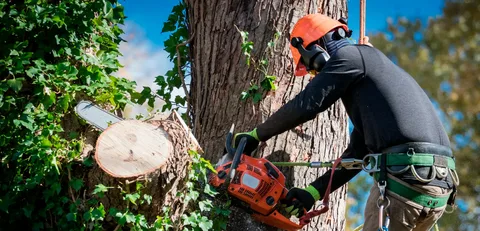
TruCutter, Inc. provides tree removal services for both residential and commercial properties. Our tree removal work can address different situations, including dead trees, hazardous trees, large trees, storm-damaged trees, and trees that need to be cleared as part of a property project.
TruCutter also provides related services that may be needed before or after tree removal, including tree trimming and pruning, emergency tree service, storm cleanup, stump grinding, land clearing, and forestry mulching.
This range of services is useful when a property project involves more than simply taking down a tree. For example, a storm-damaged tree may require emergency removal and cleanup, while a planned property project may involve tree removal followed by stump grinding or land clearing.
For homeowners and commercial property owners, TruCutter can help determine which tree or property service fits the work that needs to be completed.
Frequently Asked Questions
How do I know if a tree is unsafe?
Signs such as major trunk cracks, extensive decay, large dead branches, sudden leaning, root damage, or severe storm damage can indicate a potential safety concern. A visible warning sign does not always mean removal is required, so the tree’s overall condition should be considered.
Can a dying tree be saved instead of removed?
Sometimes. The answer depends on the cause and extent of the decline, the condition of the trunk and roots, and the tree’s overall stability. Some problems can be managed through appropriate tree care, while advanced structural decline may require removal.
Should I remove a tree that is leaning?
Not necessarily. Some trees naturally grow at an angle. A sudden or worsening lean, especially when combined with root damage, soil movement, trunk cracks, or storm damage, is more concerning and should be evaluated.
What should I do if a tree falls during a storm?
Keep people away from the fallen tree and any remaining unstable branches. Do not attempt to cut or move a large fallen tree yourself. Contact a professional tree service to determine the safest way to handle the situation.
Does tree removal include stump grinding?
Tree removal and stump grinding are separate services. After the tree is removed, TruCutter can also provide stump grinding when the remaining stump needs to be addressed.
Can TruCutter remove large trees?
Yes. TruCutter provides tree removal services for large trees as well as other residential and commercial tree removal needs. The approach depends on the tree’s size, condition, location, and surrounding property.
Does TruCutter provide residential and commercial tree removal?
Yes. TruCutter provides tree removal services for both residential and commercial properties, along with related tree and land services.
Final Thoughts
A tree does not have to look completely dead before it becomes a concern. Structural damage, severe decay, root problems, storm damage, and major dead branches can all affect a tree’s condition.
When you notice these warning signs, avoid rushing into removal or attempting a difficult tree project yourself. Getting the situation properly assessed can help determine whether the right solution is pruning, trimming, removal, cleanup, or another form of tree service.